


Since 2025, regulatory pressure has intensified for the tertiary sector in France. All companies occupying premises larger than 1,000 m² are now required to demonstrate their energy compliance or face financial penalties and negative publicity. Far from being a mere administrative constraint, this obligation represents a major strategic opportunity to optimize your consumption and sustainably reduce your energy costs. This comprehensive guide, designed by EnergyProMag.com experts, provides you with the methodology and tools to transform this requirement into a performance lever for your business.
The Eco-Energy Tertiary scheme (DEET), better known as the Tertiary Decree, is at the heart of France’s energy transition strategy. It imposes a drastic reduction in energy consumption for the entire tertiary building stock. The stakes are high, the penalties dissuasive, and the deadline for declaring 2024 data is set for September 30, 2025. To help you see clearly and act effectively, we have developed a complete compliance checklist accompanied by infographics and summary tables.
Table of Contents

Example of a modern tertiary building integrating energy efficiency solutions
What is the Tertiary Decree? An Obligation to Transform into an Opportunity
For many managers, the Tertiary Decree remains a complex notion. However, its foundations and objectives are clear and aim to accelerate the energy renovation of a sector that alone represents nearly one-third of energy consumption and more than 20% of greenhouse gas emissions in France. With 1.2 billion m² of total surface area and 249 TWh of energy consumed each year, of which 37% still comes from fossil fuels, the tertiary building stock constitutes a major lever for achieving carbon neutrality.
Origin and Ambitious Objectives
Stemming from the ELAN law (Evolution of Housing, Planning and Digital) of 2018, the Tertiary Decree imposes a results-based obligation with progressive and ambitious energy consumption reduction targets. Those subject to the decree must achieve, compared to a reference year that cannot be earlier than 2010, a reduction of:
•-40% by December 31, 2031 (evaluation based on 2030 consumption)
•-50% by December 31, 2041 (evaluation based on 2040 consumption)
•-60% by December 31, 2051 (evaluation based on 2050 consumption)
This trajectory aims to scale up energy efficiency actions and contribute significantly to achieving national carbon neutrality. The building sector, both residential and tertiary combined, alone represents 45% of final energy consumption in France, making it the second largest consumption item after transportation.
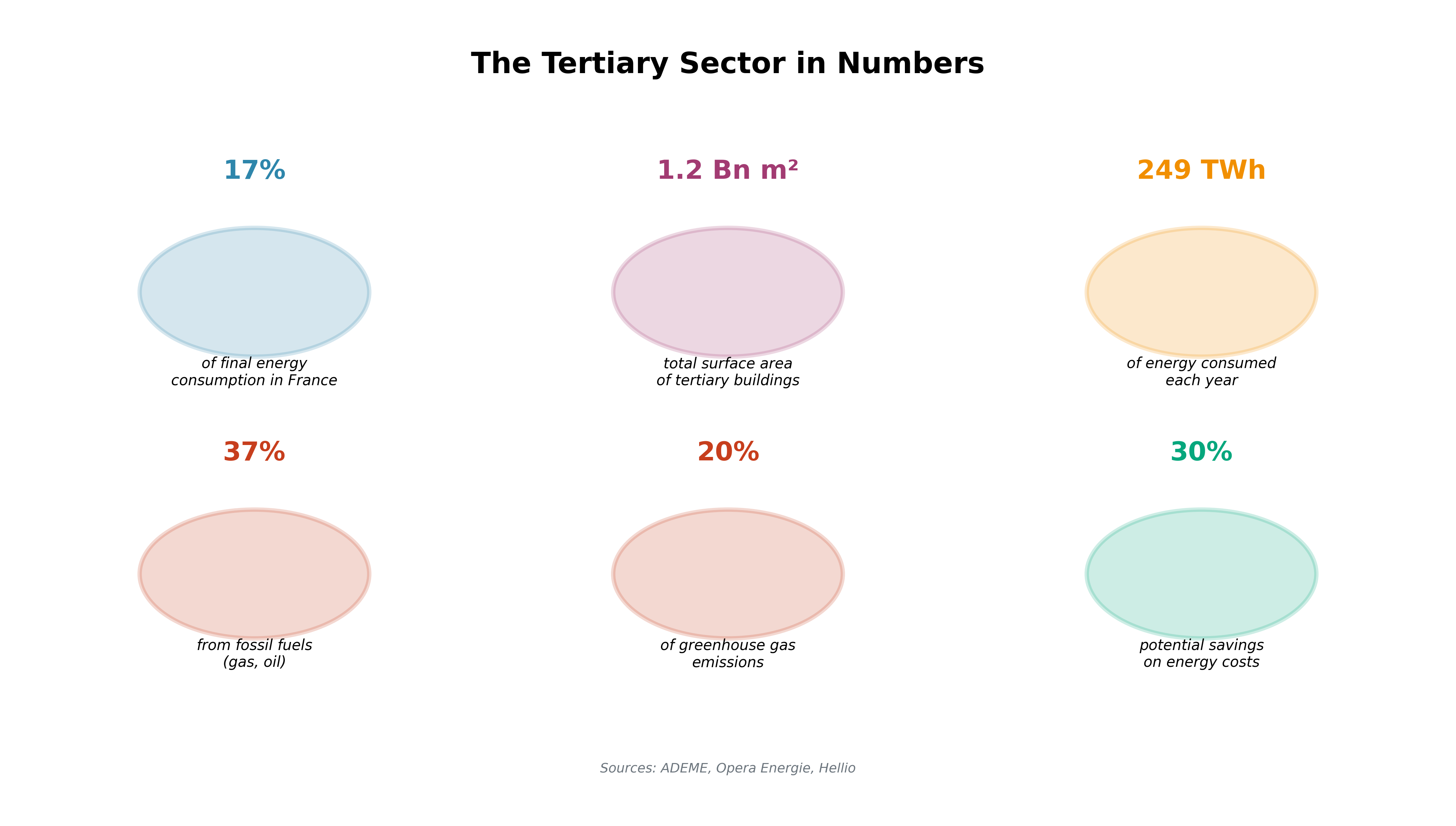
Key figures of the French tertiary sector – Sources: ADEME, Opera Energie, Hellio
Who is Affected by this Regulation?
The obligation applies to a wide range of stakeholders. Owners and, where applicable, tenants of buildings, parts of buildings, or groups of buildings hosting tertiary activities on a cumulative floor area greater than or equal to 1,000 m² are concerned. This includes both the public and private sectors, covering areas as varied as:
Offices, public services, education, healthcare, justice, retail, hospitality and catering, tourist residences and leisure, sports, culture and entertainment, logistics, airport terminals, stations (rail, road, maritime or river), automotive sales and services, data centers, parking facilities, laundries, as well as printing and reprography.
It is important to note that mixed-use buildings are also covered as soon as the surface area dedicated to tertiary activities reaches or exceeds the 1,000 m² threshold.
The 3 Fundamental Pillars of the Obligation
Compliance with the Tertiary Decree is based on a simple but rigorous triptych that structures the entire approach:
Measure constitutes the essential first step. It involves collecting and accurately analyzing annual energy consumption data for your buildings. This phase requires the implementation of a reliable metering system and systematic collection of energy bills by type of energy (electricity, natural gas, fuel oil, heating networks, etc.).
Report represents the formal obligation. Each year, before September 30, those subject to the decree must transmit their consumption data from the previous year via the government platform OPERAT, managed by ADEME. This declaration allows authorities to monitor the trajectory of each building and verify the achievement of objectives at set deadlines.
Reduce constitutes the heart of the obligation. Beyond simple declaration, those subject must implement a concrete action plan to achieve the set reduction targets. This plan can combine behavioral and organizational actions with technical investments in improving the building’s energy performance.
Tertiary Decree Obligations in 2025: Deadlines and Performance Levels
The year 2025 marks an important milestone in the deployment of the scheme. Understanding the deadlines and expected performance levels is crucial for any company wishing to secure its compliance trajectory and anticipate necessary investments.
Key Deadlines from 2025 to 2050
The regulation is marked by decades, each associated with a reduction milestone. The first evaluation of objective achievement will take place on December 31, 2031, based on 2030 consumption. It is therefore imperative to anticipate and plan actions today to avoid finding yourself in a non-compliance situation.
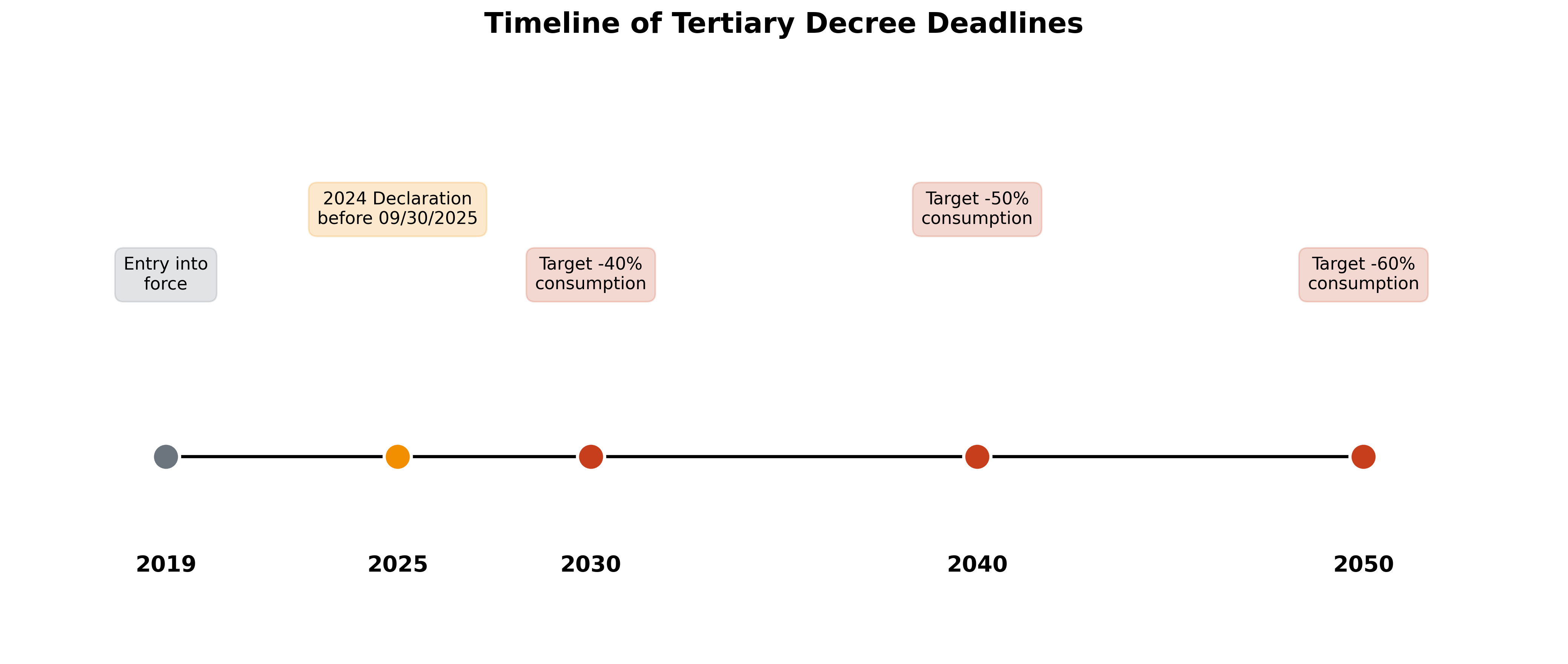
Calendar of key Tertiary Decree deadlines from 2019 to 2050
For the year 2025, the immediate deadline concerns the declaration of 2024 consumption, which must be completed before September 30, 2025 on the OPERAT platform. This annual declaration is mandatory and constitutes the basis for monitoring your compliance trajectory.
Absolute Value vs. Relative Value: Which Method to Choose?
To achieve the objectives, the decree offers two complementary approaches, and each subject can choose the one most suited to their situation. This strategic choice can have a significant impact on the ease of achieving objectives.
The relative value method (%) is the default approach and the most commonly used. It consists of reducing consumption compared to a reference year chosen by the subject, which must be after 2010. The choice of this year is strategic: a year with high consumption (due to intense activity, a particularly harsh winter, or exceptional circumstances) will offer greater room for maneuver to achieve reduction objectives. It is recommended to accurately calculate the climate factor to optimize this choice, which can save between 5% and 6% on the final objective.
The absolute value method (Cabs) constitutes an interesting alternative in certain cases. It consists of reaching a consumption threshold expressed in kWh/m²/year, set by ministerial decree according to the activity category and building specificities. This option is often more relevant for recent and efficient buildings, or those that have already undertaken significant energy renovation work. Thresholds are defined based on the energy consumption of new buildings in each category.
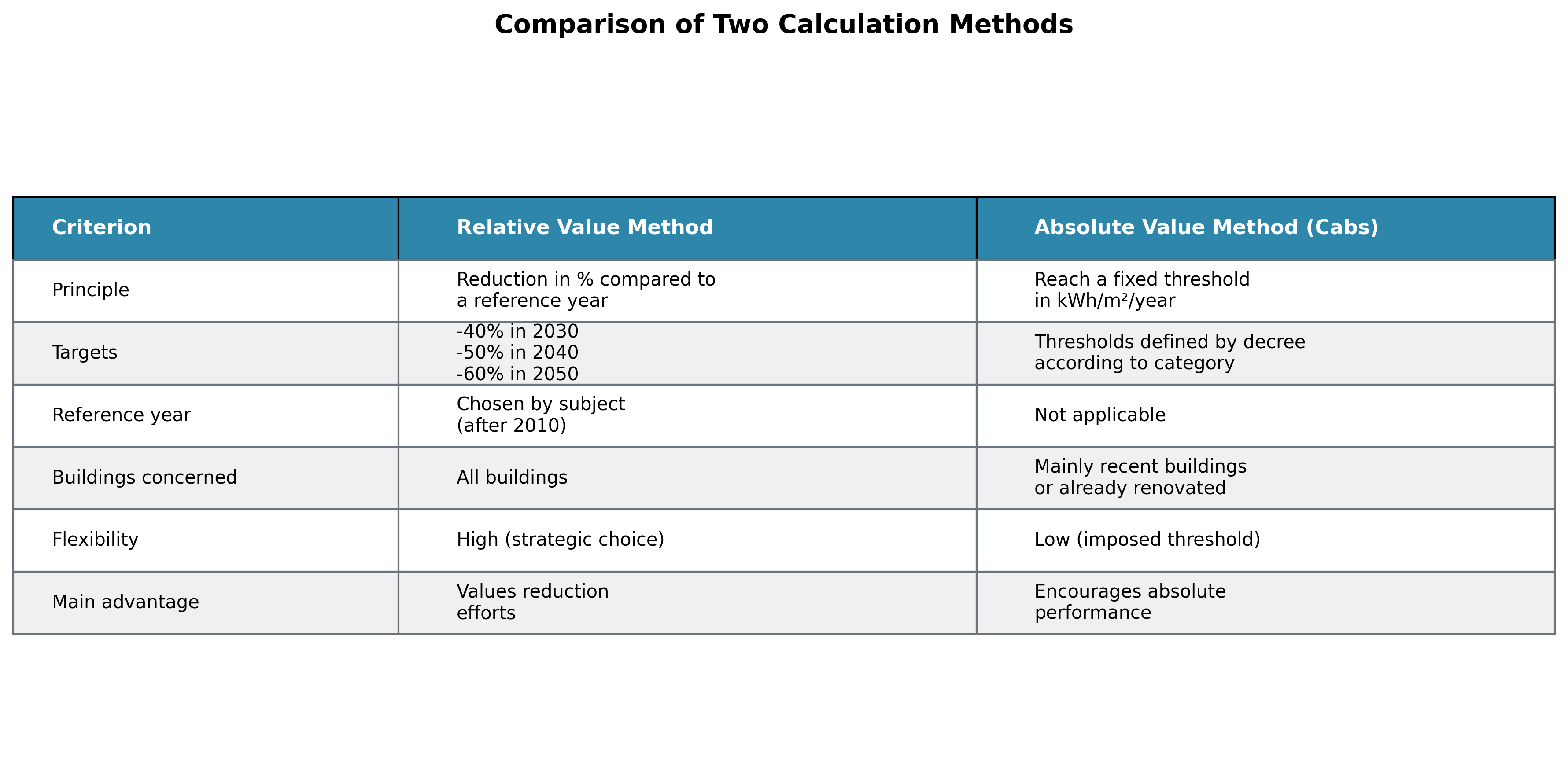
Comparative table of the two Tertiary Decree calculation methods
A new decree, Absolute Values Decree VI, should be published in the coming weeks. It will complement previous decrees by defining thresholds for new categories, including retail (DIY superstores, covered halls and markets), cinemas, as well as certain categories specific to French Overseas Departments and Regions (DROM).
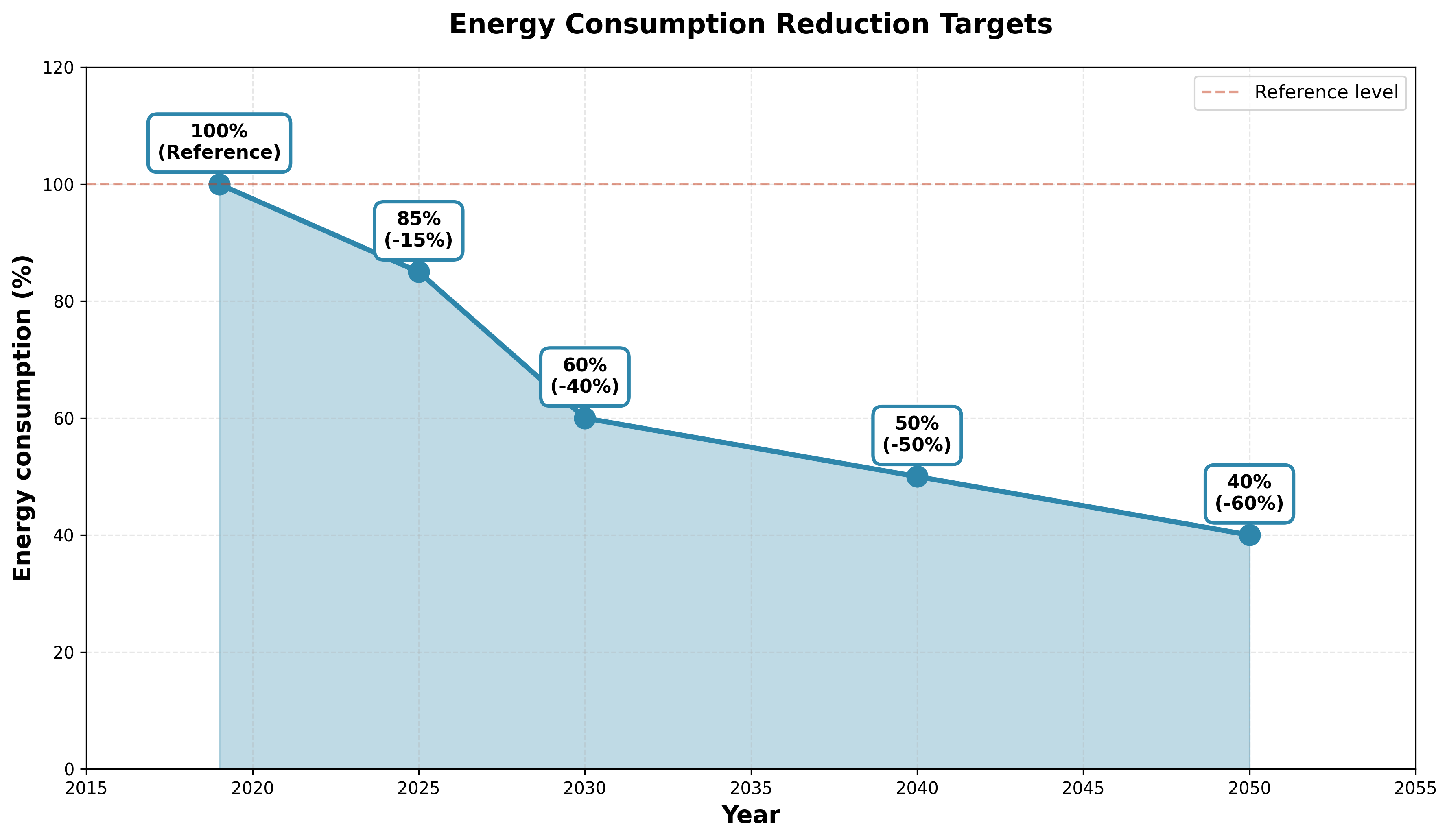
Evolution of energy consumption reduction objectives from 2019 to 2050
Data to Provide on the OPERAT Platform
The annual declaration on the OPERAT platform, managed by ADEME, is the operational pillar of the scheme. Those subject must enter a complete set of structured information:
Administrative data of the building includes precise identification of the site, its location, its surface area, as well as information on the owner and occupants. It is also necessary to define the Subject Functional Entities (EFA), which correspond to the units subject to the obligation.
Annual energy consumption must be declared by type of energy: electricity, natural gas, domestic fuel oil, heavy fuel oil, coal, wood, heating and cooling networks, etc. This data must be expressed in kWh of final energy.
Data relating to the chosen reference year must also be entered accurately, as they will serve as the basis for calculating reduction objectives in the relative method.
Possible modulations can be applied to account for activity volume (usage intensity) and climate severity. These adjustments allow consumption to be normalized and comparisons to be more relevant.
Finally, the energy savings action program must be described, detailing the measures implemented or planned to achieve reduction objectives.
The platform then generates an annual declaration certificate. An enriched new version of this certificate should be available soon, including an Eco Energy Tertiary rating ranging from an insufficient level (gray leaf) to an excellent level (three green leaves), as well as a comparison of your performance against other buildings in your sector at departmental, regional, and national levels.
The OPERAT Platform: Your Step-by-Step Declaration
Getting to grips with the OPERAT platform may seem complex during first use. Here is a simplified tutorial to guide you through this essential process and allow you to complete your declaration with complete peace of mind.
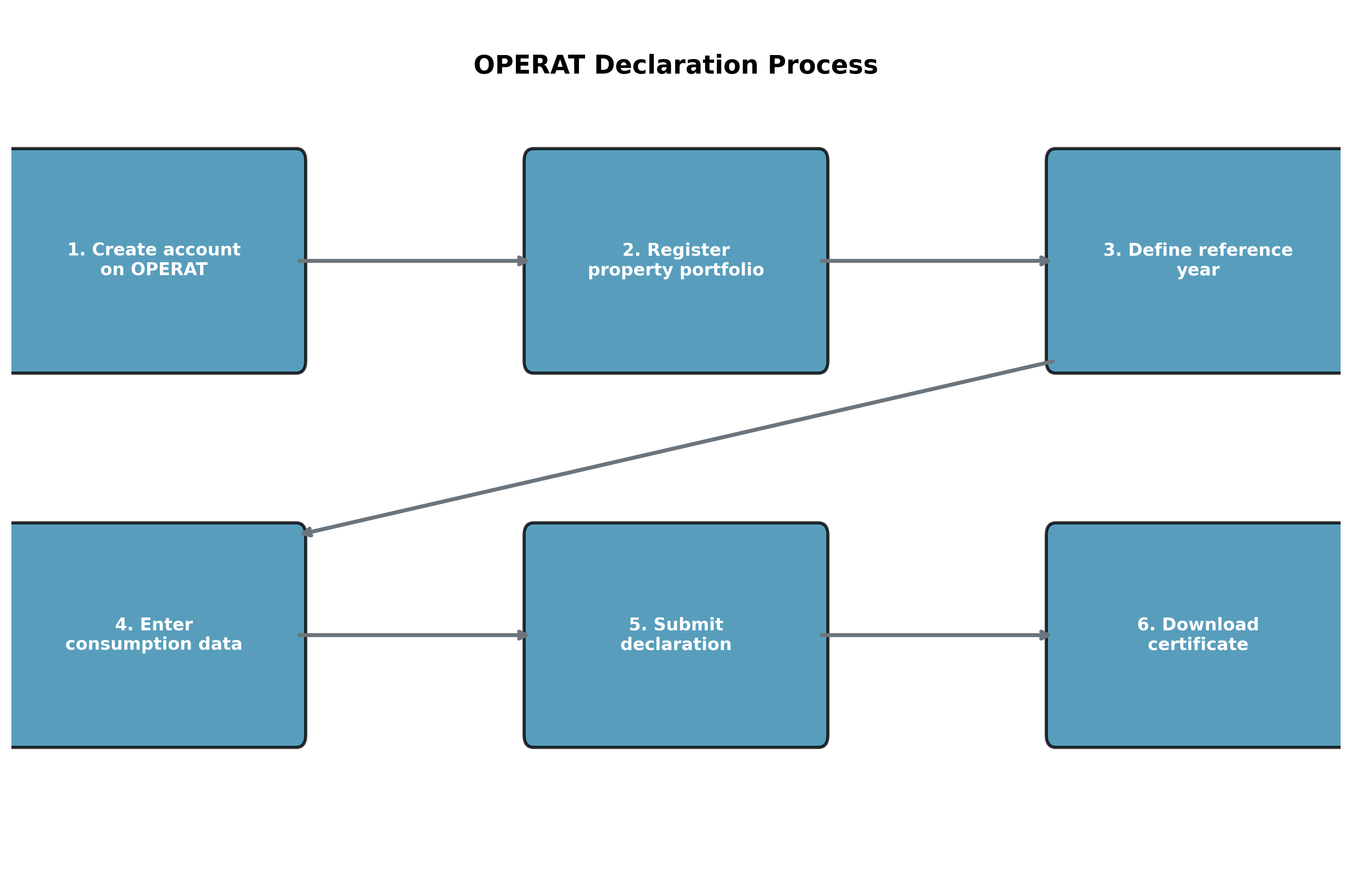
The 6 key steps of the declaration process on the OPERAT platform
Step 1: Create your account is the starting point. Go to the website operat.ademe.fr and create an account for your organization. You will need to provide your company or organization identification information and designate one or more account administrators.
Step 2: Register the property portfolio consists of entering all your subject buildings. For each site, you will need to indicate the precise address, floor area, and define the Subject Functional Entities (EFA). An EFA corresponds to a coherent unit subject to the obligation, which can be an entire building or part of a building.
Step 3: Define the reference year is a strategic step. For each EFA, you must choose your reference year (after 2010) and enter the corresponding consumption. This choice must be carefully considered, as it will determine your reduction objectives. It is recommended to be accompanied by an energy expert to optimize this choice.
Step 4: Enter consumption from the past year must be completed each year before September 30. You must report consumption by type of energy, based on your energy bills. The platform allows you to adjust this consumption according to usage intensity indicators (occupancy hours, occupancy rate, etc.).
Step 5: Submit the declaration finalizes the annual process. After verifying all the entered data, you can validate and submit your declaration. The platform performs consistency checks and can alert you if any anomaly is detected.
Step 6: Download the certificate allows you to keep proof of your declaration. Once the declaration is validated, the platform automatically generates a PDF certificate, which summarizes your consumption, your trajectory relative to objectives, and soon your Eco Energy Tertiary rating.
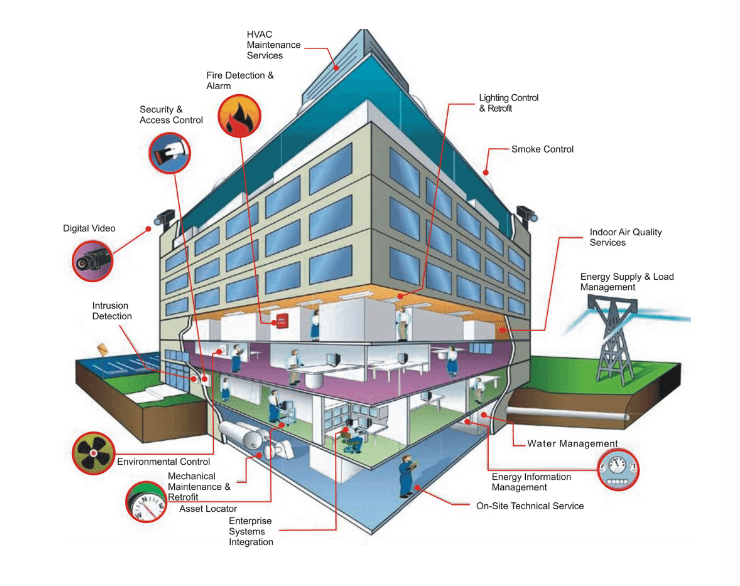
Building Management Systems (BMS) facilitate energy consumption monitoring
Tertiary Decree 2025 Compliance Checklist
To ensure you don’t miss any step in your compliance process, here is an exhaustive checklist of the 12 essential control points to verify. This list constitutes an operational tool to structure your approach and involve all stakeholders.
| No. | Control Point | Description | Status |
| 1 | Building > 1000 m² | Verify that the cumulative floor area of tertiary activities exceeds the subject threshold | ☐ |
| 2 | Tertiary activity confirmed | Ensure that hosted activities fall under the tertiary sector according to nomenclature | ☐ |
| 3 | 2020-2024 data available | Collect all energy bills from past years | ☐ |
| 4 | Normalized consumption | Adjust consumption according to climate variations and usage intensity | ☐ |
| 5 | Energy manager designated | Appoint an energy manager within the company, privileged contact for monitoring | ☐ |
| 6 | 2030 objectives set | Calculate reduction objectives in relative value or identify threshold in absolute value | ☐ |
| 7 | Action plan drafted | Develop a prioritized and costed energy savings action program | ☐ |
| 8 | Financing planned | Identify funding sources (CEE, ADEME grants, regional aid, own funds) | ☐ |
| 9 | OPERAT account created | Create the account on the platform and register the entire subject property portfolio | ☐ |
| 10 | 2024 declaration prepared | Gather all necessary data for declaration before September 30, 2025 | ☐ |
| 11 | Evidence archived | Create a digital file with all invoices, supporting documents, and certificates | ☐ |
| 12 | Dashboard implemented | Deploy a real-time consumption monitoring tool to manage performance | ☐ |
Download this checklist in PDF format for personalized monitoring and share it with your technical and management teams.
This checklist should be considered a living document, to be updated regularly as your approach progresses. It is recommended to organize quarterly review meetings to verify progress and adjust the action plan if necessary.
Penalties for Non-Compliance: What Real Risks?
Non-compliance with Tertiary Decree obligations exposes companies to gradual but severe penalties, applying the “name and shame” principle which can have significant consequences on the company’s reputation and competitiveness.
The 3-Step Penalty Process
Formal notice constitutes the first step in the penalty process. In case of non-transmission of data on OPERAT by the deadline, or obvious non-achievement of objectives without valid justification, the departmental prefect sends a formal notice to the subject. This official letter sets a deadline to regularize the situation, generally a few months.
Publication on a government website occurs if the subject does not regularize their situation within the allotted time. The company name, address of the building(s) concerned, as well as the nature of the breach are then published on a State services website. This image sanction can be very damaging, particularly for companies concerned about their social and environmental responsibility.
Administrative fine represents the ultimate penalty. If the breach persists despite publication, the prefect can impose an administrative fine proportionate to the seriousness of the facts. The amount can reach €7,500 for legal entities (companies, associations, local authorities) and €1,500 for natural persons, and this per site concerned. For a group with several non-compliant sites, the bill can therefore quickly become very heavy.
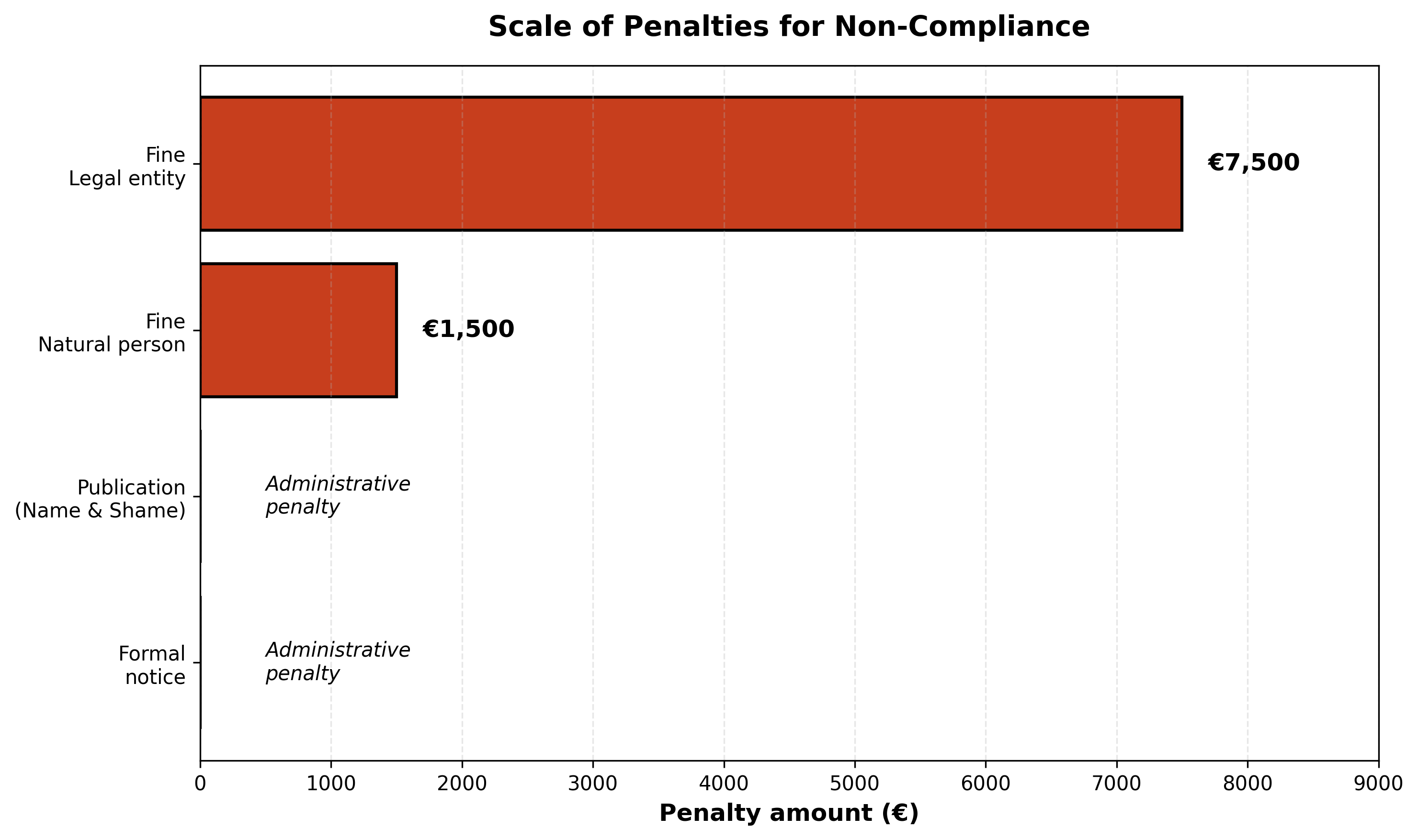
Amounts of administrative penalties for non-compliance with the Tertiary Decree
Indirect and Collateral Risks
Beyond these direct penalties, indirect risks are just as important and can have lasting consequences on the company’s activity.
Loss of green value of the building constitutes a first major risk. A building not compliant with the Tertiary Decree will see its asset value decrease, as investors and potential buyers now systematically integrate energy performance into their decision criteria. This discount can reach several tens of percent on certain assets.
Difficulties obtaining financing represent another significant risk. Banks and investors are increasingly attentive to ESG criteria (Environment, Social, Governance) and may refuse to finance projects involving buildings not compliant with environmental regulations.
Exclusion from public procurement can also occur. Many local authorities and administrations now integrate energy performance criteria into their calls for tender, and a non-compliant building can disqualify a candidate company.
Brand image degradation finally constitutes a major reputational risk. In a context where consumers and stakeholders are increasingly sensitive to environmental issues, a company sanctioned for non-compliance with the Tertiary Decree can see its image seriously tarnished.
The 3 Most Common Mistakes to Avoid
Analysis of the first inspections carried out by State services allows identification of three recurring errors that lead to non-compliance situations:
Incomplete or late declaration comes first. Many subjects forget the September 30 deadline or do not enter all required data, thinking they can complete later. However, the OPERAT platform requires complete validation before submission.
Erroneous or inconsistent data constitute the second common error. Entry errors, confusion between units (kWh, MWh, kWh/m²), or inconsistencies between years can invalidate the declaration and lead to formal notice.
Absence of annual monitoring represents the third major error. Some subjects complete their first declaration then neglect monitoring in subsequent years, thinking the obligation is one-time. However, the declaration is annual and mandatory, and the absence of declaration in a given year can trigger the penalty process.
Aid and Subsidies: How to Finance Your Compliance?
Compliance with the Tertiary Decree represents an investment, but numerous funding mechanisms exist to significantly lighten the financial burden. It is essential to identify and mobilize them strategically to optimize the return on investment of your actions.
Energy Savings Certificates (CEE): The Main Lever
Energy Savings Certificates constitute the main mechanism for financing energy efficiency work in France. This scheme obliges energy suppliers (electricity, gas, fuel oil, etc.) to promote energy efficiency among their customers. In return for work carried out, you can obtain CEE premiums that can cover a significant part of the investment, sometimes up to 30% or 40% of the total amount.
Eligible operations are numerous and cover most relevant actions for the Tertiary Decree: attic, wall and floor insulation, window replacement, installation of efficient heating systems, implementation of Building Technical Management (GTB), LED lighting replacement, heat recovery system installation, etc.
To benefit from CEE, it is imperative to respect a strict procedure: steps must be initiated before signing the quote, work must be carried out by an RGE-qualified professional (Recognized Environmental Guarantor), and installed equipment must meet minimum performance criteria defined by standardized operation sheets.
ADEME and BPI France Aid
ADEME (Ecological Transition Agency) offers several financial support schemes for companies and local authorities engaged in energy transition. This aid can take the form of subsidies for conducting in-depth energy audits, for implementing energy management systems (ISO 50001), or for acquiring innovative and efficient equipment.
BPI France, the public investment bank, offers subsidized loans and guarantees to finance energy efficiency investments. These schemes are particularly suited for comprehensive renovation projects requiring significant investments.
Regional and Local Aid
Many regions and local authorities have implemented complementary aid programs to support the energy transition of companies in their territory. This aid can take various forms: direct subsidies, interest rate bonuses, repayable advances, etc.
It is recommended to consult your region and department website to identify locally available schemes. Some regions also offer free support from specialized advisors to help you structure your project and identify mobilizable funding.
| Type of Aid | Organization | Amount / Rate | Conditions | Procedure |
| CEE | Energy suppliers | 20-40% of amount excl. tax | Eligible work, RGE company | Before signing quote |
| ADEME aid | ADEME | Variable by project | Audit, innovation, EMS | Application file |
| BPI loans | BPI France | Subsidized rate | Structured project, profitability | Banking file |
| Regional aid | Regional council | Variable by region | Local establishment | By region |
| Crowdfunding | Dedicated platforms | Variable | Impact project | Communication campaign |
Simulate your eligible aid with our free CEE calculator and get a personalized estimate in a few clicks.
How to Effectively Reduce Your Consumption and Achieve Objectives?
Achieving Tertiary Decree objectives is not limited to a simple administrative declaration. It requires a structured, prioritized action plan adapted to the specificities of each building. The approach must combine short-term actions with rapid return on investment and heavier investments with structural impact.
Energy Audit: The Mandatory Starting Point
The energy audit constitutes the foundation of any energy performance approach. Carried out by a qualified engineering firm or certified auditor, it provides a complete and objective assessment of your energy consumption and identifies the most relevant and profitable energy savings opportunities for your specific situation.
The audit generally includes several phases. The data collection phase allows gathering all necessary information: energy bills from recent years, building plans, technical characteristics of equipment, occupancy and usage modes, etc.
The site visit phase allows the auditor to concretely observe the building, identify weak points in the envelope (thermal bridges, insulation defects, air infiltration), analyze heating, ventilation and air conditioning systems, and take measurements if necessary (infrared thermography, airtightness test, etc.).
The analysis and modeling phase allows quantifying consumption by use (heating, domestic hot water, lighting, ventilation, air conditioning, specific equipment) and identifying the most energy-intensive items.
Finally, the recommendations phase results in a prioritized action program, with for each action: technical description, estimated investment cost, expected energy savings, payback time, and mobilizable financial aid. The audit must also simulate the overall impact of the action program on achieving Tertiary Decree objectives.
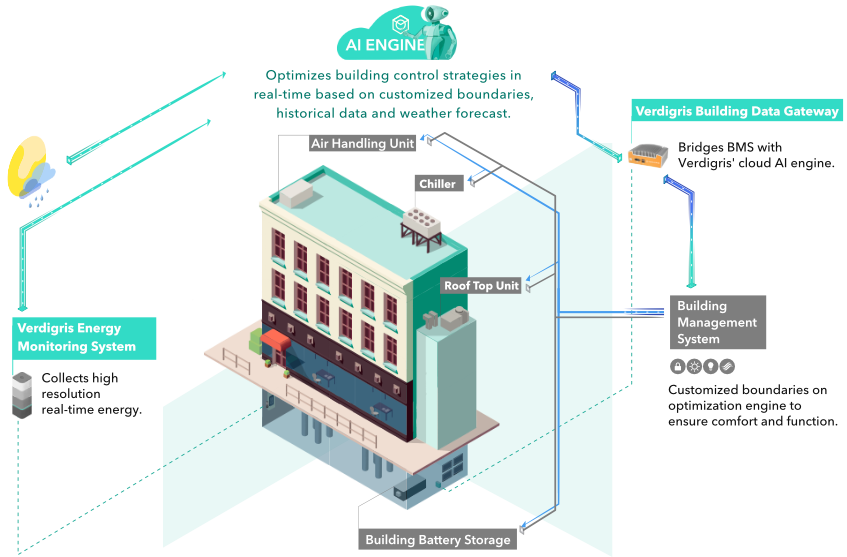
Adaptive energy management strategies optimize building performance
Priority Action Plan: Prioritize to Optimize
Based on the audit, a priority action plan must be developed. Prioritizing actions is crucial to optimize the use of available financial and human resources. Three categories of actions can be distinguished:
Zero or low-cost actions should be implemented as a priority. They mainly concern optimization of settings and behaviors: adjustment of heating and air conditioning setpoint temperatures, optimization of operating time slots, occupant awareness of eco-gestures, equipment shutdown during unoccupied periods, etc. These actions can generate savings of around 5% to 15% without significant investment.
Actions with rapid return on investment (less than 5 years) constitute the second priority. They notably include LED lighting replacement, installation of thermostatic valves on radiators, implementation of efficient heating control, distribution network insulation, installation of presence detectors for lighting, etc. These actions combine moderate investment cost and significant savings.
Structural investments (return on investment of 5 to 15 years or more) must be planned over the medium and long term. They concern building envelope insulation (roof, walls, ground floors), window replacement, boiler room replacement with an efficient system, implementation of complete Building Technical Management (GTB), heat recovery system installation, photovoltaic or thermal solar panel installation, etc.
Annual Monitoring: Measure to Manage
Implementation of an energy dashboard is essential to monitor the evolution of your consumption, measure the effectiveness of actions taken, and correct the trajectory if necessary. This dashboard must allow real-time or minimal delay visualization of consumption by type of energy, by use, and by building zone.
Energy monitoring technologies have evolved considerably in recent years. Connected solutions now allow automatic collection of consumption data, analysis, and generation of alerts in case of drift or anomaly. These tools greatly facilitate energy performance management and allow rapid detection of malfunctions.
Monitoring must be formalized by regular review meetings (quarterly or semi-annual) bringing together stakeholders: energy manager, technical manager, management, and possibly external service providers. These meetings allow analyzing results, validating action plan progress, and adjusting strategy if necessary.
FAQ: Tertiary Decree 2025 – Your Questions, Our Answers
What exactly is the Tertiary Decree?
The Tertiary Decree, officially called “Eco-Energy Tertiary Scheme” (DEET), is a regulatory obligation stemming from the 2018 ELAN law. It requires owners and tenants of tertiary buildings larger than 1,000 m² to reduce their energy consumption by -40% by 2030, -50% by 2040, and -60% by 2050, compared to a chosen reference year (after 2010).
Who must declare on the OPERAT platform?
All owners and, where applicable, tenants of buildings or parts of buildings for tertiary use whose cumulative floor area is greater than or equal to 1,000 m² must make an annual declaration on OPERAT. This obligation concerns both the public and private sectors.
What buildings are covered by the Tertiary Decree?
All buildings hosting tertiary activities are covered: offices, retail, educational establishments, healthcare facilities, hotels, restaurants, sports halls, cinemas, stations, airports, shopping centers, etc. Mixed-use buildings are also covered if the tertiary surface reaches or exceeds 1,000 m².
How to calculate the reference consumption?
Reference consumption corresponds to the energy consumption of a year chosen by the subject, which must be after 2010. It is recommended to choose a year representative of normal building activity, ideally a year when consumption was high (harsh winter, high activity). Consumption must be adjusted according to climate variations to be comparable.
What are the penalties for forgetting or non-compliance?
In case of non-declaration or non-achievement of objectives without justification, the subject is exposed to formal notice, then publication of their name on a government website (“name and shame”), and finally an administrative fine that can reach €7,500 for legal entities and €1,500 for natural persons, per site concerned.
What’s the difference between absolute value and relative value?
The relative value method consists of reducing consumption as a percentage compared to a chosen reference year (-40% in 2030, -50% in 2040, -60% in 2050). The absolute value method (Cabs) consists of reaching a fixed consumption threshold, expressed in kWh/m²/year, defined by ministerial decree according to activity category. Each subject can choose the most favorable method.
What tools to use to monitor compliance?
The OPERAT platform is the official tool for declaring consumption and monitoring trajectory. In addition, it is recommended to implement an energy monitoring system (consumption tracking software, GTB, etc.) to manage daily building energy performance and detect drifts.
Does the Tertiary Decree concern rented buildings?
Yes, the Tertiary Decree concerns both owners and tenants. Responsibility for declaration and achieving objectives is shared. It is therefore essential that owners and tenants collaborate and clearly define their respective responsibilities, ideally in the lease or through an amendment.
What is the deadline for the 2025 declaration?
The deadline for declaring 2024 consumption is set for September 30, 2025. This deadline is imperative and cannot be postponed. It is recommended to anticipate and prepare your declaration from early summer to avoid any risk of forgetting.
How to prove compliance with the Tertiary Decree?
Compliance is attested by the annual declaration on OPERAT and by the PDF certificate generated by the platform after validation. This certificate summarizes your consumption, your trajectory relative to objectives, and soon your Eco Energy Tertiary rating. It is also recommended to keep all supporting documents (energy bills, audit reports, proof of work completed).
Can performance be pooled between several buildings?
Yes, the Tertiary Decree offers some flexibility by allowing pooling between buildings in the same portfolio. Good performance of one building can thus compensate for less favorable performance of another, provided the buildings belong to the same entity and are located in the same geographical area.
Conclusion: Transform Constraint into Competitive Advantage
The Tertiary Decree should not be perceived as an additional administrative constraint, but rather as a tremendous opportunity to modernize your real estate portfolio, improve occupant comfort, and achieve substantial savings on your energy bills. Companies that have anticipated and structured their approach observe cost reductions that can reach up to 30% on their energy expenses, while enhancing their assets and strengthening their brand image.
By anticipating deadlines, structuring your approach methodically, and mobilizing available funding, you will transform this regulatory obligation into a true performance and competitiveness lever. Energy-efficient buildings are more attractive to tenants, more valued by investors, and more resilient to rising energy prices.
The first evaluation deadline in 2031 may seem distant, but the actions to implement require time: conducting audits, developing action plans, seeking funding, carrying out work. Now is the time to act to secure your trajectory and avoid finding yourself in a non-compliance situation.
Don’t suffer regulation, manage your energy performance.
Download our complete PDF checklist, use our online compliance simulator, and contact our experts to benefit from a free pre-diagnosis of your situation. The EnergyProMag.com team supports you at every stage of your Tertiary Decree compliance process.
References and Sources
[1] ADEME, “Energy Key Figures – 2023 Edition”, consulted on opera-energie.com
[2] Hellio, “Tertiary Decree: what changes and key dates in 2025?”, October 2025, hellio.com
[3] Légifrance, “Decree of August 1, 2025 amending the decree of April 10, 2020 relating to obligations for actions to reduce final energy consumption”, legifrance.gouv.fr
[4] ADEME, “OPERAT Platform – Observatory of Energy Performance, Renovation and Tertiary Actions”, operat.ademe.fr
[5] Opera Energie, “Tertiary Decree: 2025 guide and solutions for your buildings”, October 2025, opera-energie.com
About EnergyProMag.com
EnergyProMag.com is the reference magazine for energy brokerage professionals and the energy sector. We support companies in their energy transition by providing expert analyses, practical guides, and operational tools to optimize their energy performance and reduce their costs.
Keywords: French tertiary decree, tertiary sector compliance, OPERAT platform, energy declaration, tertiary buildings, energy consumption reduction, tertiary decree penalties, energy audit, CEE, energy efficiency, ELAN law, eco-energy tertiary scheme, absolute value, relative value, 2025
Article written by the EnergyProMag.com editorial team – Updated October 17, 2025
French Tertiary Decree 2025: The Ultimate Compliance Checklist to Avoid Penalties - EnergyPro MAG

Since 2025, regulatory pressure has intensified for the tertiary sector in France. All companies occupying premises larger than 1,000 m² are now required to demonstrate their energy compliance or face financial penalties and negative publicity. Far from being a mere administrative constraint, this obligation represents a major strategic opportunity to optimize your consumption and sustainably reduce your energy costs. This comprehensive guide, designed by EnergyProMag.com experts, provides you with the methodology and tools to transform this requirement into a performance lever for your business.
4.8


